Contextual Safeguarding Meaning: Definition, Examples and Why It Matters in Child Protection UK (Schools, Online Spaces & Communities Explained)

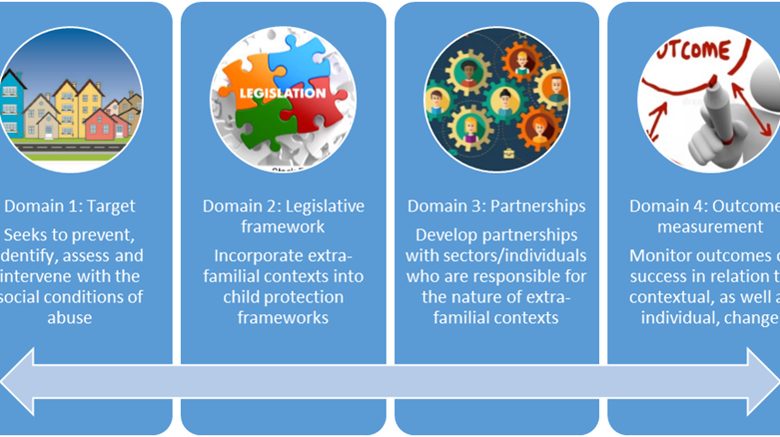
The contextual safeguarding meaning refers to a modern child protection approach that recognises young people can experience harm beyond their family environment. In the UK, this concept has become essential in addressing risks found in schools, communities, peer groups, and online spaces. Instead of focusing only on home life, it examines the wider social contexts influencing a child’s safety and wellbeing.


Understanding the contextual safeguarding meaning is important because many forms of harm today occur outside parental supervision. Young people may face exploitation, bullying, or pressure in public places or digital environments. This approach helps professionals identify where risks are happening and take action to make those environments safer for everyone involved.
Definition of contextual safeguarding meaning
The contextual safeguarding meaning can be defined as a safeguarding framework that focuses on protecting children from harm in external environments rather than only within the home. It acknowledges that risks may arise in schools, neighbourhoods, or online platforms where families have limited control. This broader understanding reshapes how safeguarding is implemented in practice.
When exploring the contextual safeguarding meaning, it becomes clear that the approach shifts attention from individual responsibility to environmental factors. It encourages safeguarding professionals to assess peer groups, community spaces, and social influences. By doing so, it provides a more complete understanding of the situations that contribute to harm and vulnerability among young people.
Key principles behind contextual safeguarding meaning
A central principle of the contextual safeguarding meaning is the recognition of extra-familial harm. This refers to risks that occur outside the home, such as exploitation, peer abuse, or gang involvement. The focus is not only on the child but also on the environment in which the harm is taking place, making prevention more effective.
Another important aspect of contextual safeguarding meaning is collaborative intervention. Schools, social services, police, and community organisations work together to address unsafe environments. This multi-agency approach ensures that safeguarding is not isolated but instead coordinated across different sectors, creating stronger protection systems for children and young people.
Contextual safeguarding meaning in schools
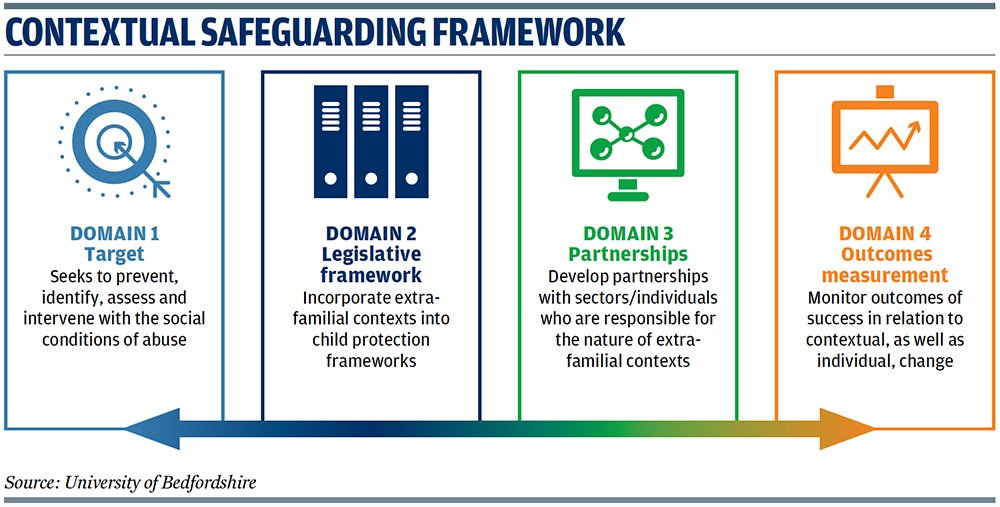
In educational settings, the contextual safeguarding meaning plays a crucial role in identifying and addressing risks that arise within school environments. Schools are often where young people interact socially, making them key locations for recognising harmful behaviours such as bullying or peer pressure. Safeguarding policies in schools now reflect this wider responsibility.
Applying contextual safeguarding meaning in schools involves creating safe learning environments and monitoring areas where risks may occur. Teachers and designated safeguarding leads are trained to identify early signs of harm, both online and offline. This proactive approach ensures that issues are addressed before they escalate, protecting not just individual students but the wider school community.
Examples of contextual safeguarding meaning in practice
Real-life applications of contextual safeguarding meaning include tackling criminal exploitation, often referred to as county lines. In these situations, young people are targeted in public spaces and drawn into illegal activities. Addressing the environment where this recruitment occurs is essential for breaking the cycle of exploitation and preventing further harm.
Another example of contextual safeguarding meaning is online safety. Social media platforms can expose young people to grooming, manipulation, or abusive behaviour. Safeguarding professionals now work to identify digital risks and collaborate with technology companies to improve online protections. This ensures that virtual environments are treated with the same seriousness as physical spaces.
Contextual safeguarding meaning within the UK system
Within the UK, the contextual safeguarding meaning is embedded in national safeguarding frameworks and child protection policies. Local safeguarding partnerships bring together schools, police, health services, and social care to address risks across different environments. This coordinated system ensures that children are protected beyond the boundaries of their homes.
The implementation of contextual safeguarding meaning in the UK system has improved how professionals respond to complex safeguarding cases. Instead of focusing solely on the child or family, agencies now examine the wider context in which harm occurs. This shift has strengthened prevention strategies and improved early identification of risky environments across communities.
Benefits of contextual safeguarding meaning
One of the key benefits of the contextual safeguarding meaning is its ability to identify risks that might otherwise remain hidden. By focusing on environments, professionals can recognise patterns of harm affecting groups of young people. This leads to more effective interventions that target the root causes of safeguarding issues rather than only responding to individual cases.
Another benefit of contextual safeguarding meaning is its preventative approach. By addressing unsafe environments, entire communities become safer for children and young people. This reduces the likelihood of repeated harm and ensures that safeguarding efforts have a long-term impact. It also encourages shared responsibility among professionals and community members.
Challenges of contextual safeguarding meaning
Despite its strengths, the contextual safeguarding meaning presents several challenges in practice. One major difficulty is identifying hidden risks in dynamic environments such as online platforms or informal social settings. These spaces change quickly, making it harder for professionals to consistently monitor and respond to emerging threats.
Another challenge within contextual safeguarding meaning is coordination between multiple agencies. Effective safeguarding requires strong communication between schools, social services, and law enforcement. However, differences in procedures, priorities, and resources can sometimes create barriers, making it difficult to implement a fully unified approach across all safeguarding partners.
Future of contextual safeguarding meaning
The future of contextual safeguarding meaning is closely linked to the growing importance of digital safety. As young people spend more time online, safeguarding strategies must evolve to address risks in virtual environments. This includes stronger collaboration with social media companies and improved digital education in schools.
Moving forward, contextual safeguarding meaning will continue to emphasise prevention and early intervention. Schools and community organisations will play an even greater role in identifying risks before harm occurs. This proactive approach aims to create safer environments both online and offline, ensuring better protection for future generations of young people.
Conclusion
The contextual safeguarding meaning represents a significant shift in how child protection is understood and applied in the UK. It highlights that safeguarding is not limited to the home but extends to all environments where young people interact. This broader perspective helps professionals respond more effectively to modern risks.
Ultimately, the contextual safeguarding meaning reinforces the importance of shared responsibility in protecting children. By addressing harmful environments and strengthening collaboration between agencies, it creates a more comprehensive safeguarding system. This ensures that young people are better protected across schools, communities, and digital spaces.